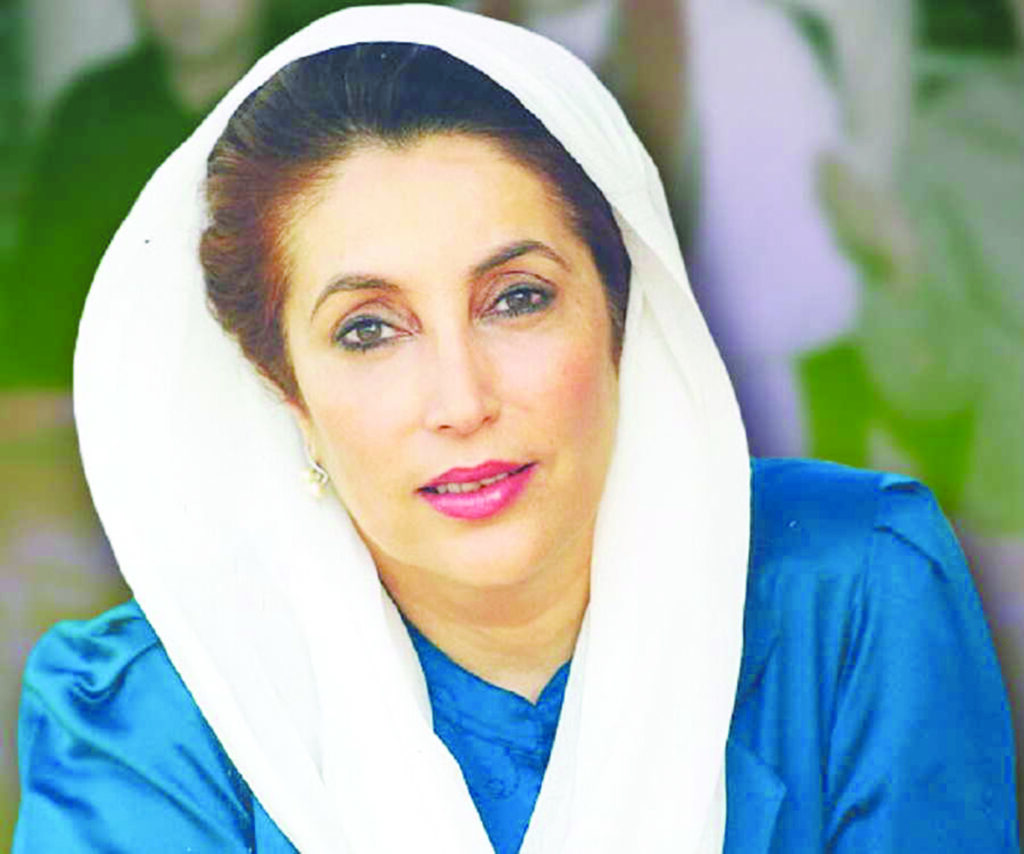
Pakistan Ex Prime Minister Benazir Bhutto Benazir Bhutto (1953–2007) was a monumental figure in global politics, serving twice as the Prime Minister of Pakistan (1988–1990 and 1993–1996). She made history as the first woman to lead a democratic government in a Muslim-majority nation. Key Highlights of Her Life and Career Political Heritage: She was the eldest daughter of Zulfikar Ali Bhutto, Pakistan’s first popularly elected Prime Minister and founder of the Pakistan Peoples Party (PPP). Education: Bhutto was educated at prestigious Western institutions, attending Radcliffe College at Harvard University and later the University of Oxford, where she became the first Asian woman to serve as President of the Oxford Union. Rise to Power: After her father’s execution in 1979 under General Zia-ul-Haq’s military regime, she led the pro-democracy movement from prison and exile. She returned in 1986 to massive public acclaim and led the PPP to victory in the 1988 elections following Zia’s death. Premierships & Challenges: Both of her terms were cut short by presidential dismissals (in 1990 and 1996) amid allegations of corruption and mismanagement, though she maintained these charges were politically motivated. Exile & Return: She spent nearly a decade in self-imposed exile (1998–2007) in Dubai and London before returning to Pakistan in October 2007 under an amnesty deal with President Pervez Musharraf to contest the 2008 elections. Assassination and LegacyOn 27 December 2007, Benazir Bhutto was assassinated in a gun and suicide bomb attack after addressing a political rally at Liaquat National Bagh in Rawalpindi. Immediate Impact: Her death sparked nationwide riots and a delay in the general elections. Succession: Leadership of the PPP passed to her husband, Asif Ali Zardari, and their son, Bilawal Bhutto Zardari. Honours: She is posthumously referred to as Shaheed-e-Jamhuriat (Martyr of Democracy) by her supporters. Publications: She authored several works, most notably her autobiography, Daughter of the East. Benazir Bhutto – Complete Detailed History Early Life and Family Background Full Name: Benazir Bhutto Born: 21 June 1953 Birthplace: Karachi, Pakistan Father: Zulfikar Ali Bhutto (Founder of PPP, Prime Minister of Pakistan) Mother: Begum Nusrat Bhutto Benazir was born into one of Pakistan’s most prominent political families. Her father, Zulfikar Ali Bhutto, founded the Pakistan Peoples Party (PPP) in 1967 and became President (1971–1973) and later Prime Minister (1973–1977). Education Benazir received elite international education: Harvard University (Radcliffe College) – Bachelor’s degree in Comparative Government (1973) University of Oxford – Studied Philosophy, Politics & Economics (PPE) Became the first Asian woman President of the Oxford Union (1976) Her Western education shaped her liberal and democratic political ideology. Political Crisis & Father’s Execution (1977–1979) In July 1977, General Zia-ul-Haq overthrew Prime Minister Zulfikar Ali Bhutto in a military coup. Benazir and her family were repeatedly placed under house arrest. After a controversial trial, Zulfikar Ali Bhutto was executed on 4 April 1979. This event deeply transformed Benazir’s life. At just 25 years old, she became the political heir of PPP. Struggle Against Military Dictatorship (1979–1986) During General Zia’s rule: Benazir was imprisoned multiple times. Placed in solitary confinement. Suffered health issues during detention. Eventually allowed to go into exile in the UK (1984). From exile: She reorganized PPP. Mobilized international support against Zia’s dictatorship. Became a global symbol of resistance against military rule. Return to Pakistan (1986) On 10 April 1986, Benazir returned to Pakistan. Millions welcomed her in Lahore. It was one of the largest political rallies in Pakistan’s history. She officially led the Movement for the Restoration of Democracy (MRD). Her return marked the beginning of democratic revival in Pakistan. First Term as Prime Minister (1988–1990) After General Zia died in a plane crash in August 1988, elections were held. 1988 Elections PPP won the largest number of seats.Benazir Bhutto became: First Female Prime Minister of Pakistan First Female Prime Minister in the Muslim World (Age 35) Major Policies (First Term): Democratic Restoration Released political prisoners. Restored press freedoms. Reinstated student and labor unions. Women’s Development Established Ministry of Women Development. Created First Women Bank. Opened women police stations. Social Programs Focused on health and education expansion. Promoted vaccination campaigns. Challenges: Power struggle with President Ghulam Ishaq Khan. Conflict with military establishment. Allegations of corruption. Economic instability. Dismissal (1990) Her government was dismissed by the President on charges of corruption and mismanagement. Second Term as Prime Minister (1993–1996) After political instability and elections in 1993, PPP returned to power. Key Policies (Second Term): Infrastructure & Energy Initiated power generation projects. Encouraged private sector investment. Telecommunications Revolution Opened telecom sector to private companies. Laid foundation for mobile phone expansion. Foreign Policy Strengthened ties with US and Muslim countries. Advocated Kashmir issue internationally. Social Welfare Expanded Lady Health Worker Program. Promoted women participation in public sector. Controversies During Second Term Her husband, Asif Ali Zardari, was accused of corruption and nicknamed “Mr. Ten Percent”. Law and order problems in Karachi. Tensions with judiciary and military. In November 1996, her government was dismissed again by President Farooq Leghari on corruption charges. Exile (1999–2007) After General Pervez Musharraf’s coup in 1999: Benazir went into self-exile (Dubai & London). Faced corruption cases in Pakistan. Continued leading PPP from abroad. Worked on restoring democracy. She authored her autobiography:📖 “Daughter of the East” Return in 2007 & Assassination National Reconciliation Ordinance (NRO) In 2007, corruption cases were withdrawn under NRO, allowing her return. Return to Pakistan – 18 October 2007 Massive rally in Karachi. Suicide bombing attacked her convoy. She survived but over 130 people died. Assassination – 27 December 2007 During an election rally in Rawalpindi. Shot and followed by a suicide blast. Died at age 54. Her death shocked the world. PPP won the 2008 elections largely due to sympathy wave. Political Legacy Achievements: ✔ First woman PM in Muslim world✔ Symbol of democratic resistance✔ Promoter of women empowerment✔ Strengthened health programs (Lady Health Workers)✔ Opened telecom & private power sector Criticism: ✖ Corruption allegations✖ Weak governance✖ Political instability✖ Dynastic politics Family & Succession After her death: Asif Ali Zardari became President (2008–2013). Her son Bilawal Bhutto Zardari became Chairman of PPP. Her political legacy continues through PPP. Timeline Summary Year Event 1953 Born in Karachi 1977 Father overthrown